
List of Authorised Colonies in Delhi & Under Unauthorised Colonies in Delhi
Aadil Saif 22 November 2019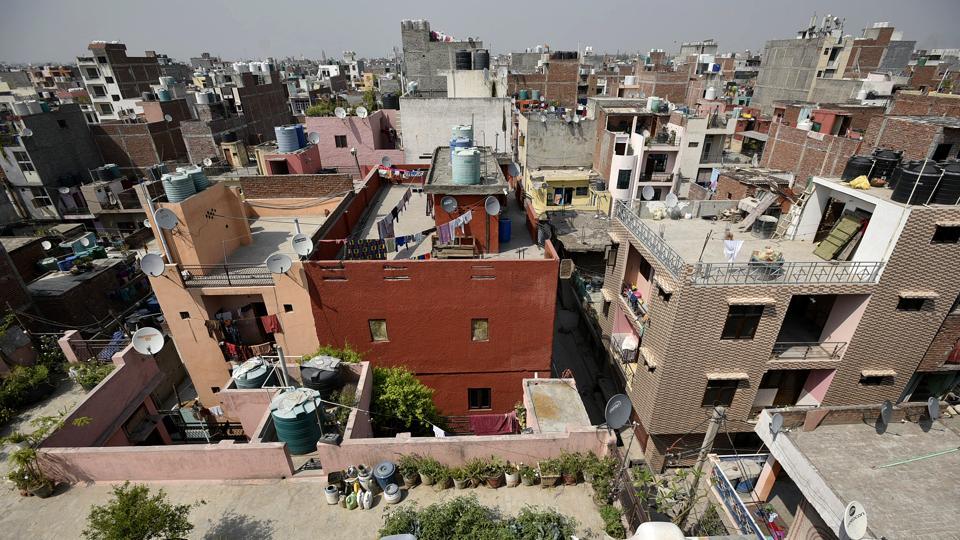
The Centre is about to regularize ownership rights for people living under unauthorised colonies in Delhi
In a move that is about to benefit nearly 40 lakh people, a proposal has been approved by the Union Cabinet recently that shall grant ownership rights for the people who are said to be living under the unauthorized colonies present in Delhi. Way back in the year 2007, the State Government did receive about 1639 applications for the very first land authorization efforts made by their side. The unauthorised colonies that are said to be located within the ridge lands, forests and close to the ASI areas are also at present taken under active consideration by the DDA for the colony authorization process.
The colony regularization process:
The colony regularization process shall start and get completed within three months of the time period. After the bill is said to be passed in the upcoming winter season, the DDA shall collect the list of authorised colonies in Delhi 2017-2019 at first and then collect the unauthorized ones for survey purposes.
- The DDA (Delhi Development Authority) shall create a unique web portal that can be accessed by the residents living in an unauthorized colony area to apply for ownership rights and to know more about it as well.
- Being a resident of an unauthorized colony area, you need to first submit a self-assessment certificate and make sure to calculate the overall registration levy too.
- The registration fees can be paid through gateway passed online sources and a receipt (challan) representing the transfer shall get generated.
- The DDA Field Officer shall visit and verify with size of the plot and the carpet area that are mentioned by the resident during the ownership rights registration process.
- Upon their verification, the conveyance deed shall get generated and it needs to be submitted at the registrar’s office to legally register the property.
- Residents do get an option to pay the fees in three different installments, yet, if a resident decides to pay the full amount in one installment, then they can attain the ownership right immediately.
Distinctive features of regularized colonies:
The list of regularised colonies in Delhi 2019 had a count of about 1,797 colonies and it demanded the residents to pay a nominal penalty along with one percent of the land rate to attain the ownership rights.
- People living under regularized colonies can swiftly obtain authorization from the concerned Government authorities to build any kind of civil infrastructures.
- Sewage and drainage collecting facilities shall be added to colonies that are authorized by the DDA.
- Living in an authorized piece of land can even develop the real estate value year by year, as the entire colony is about to get developed in one way or another.
- Internally connecting roads shall be developed and maintained to avoid any kind of water-logging from happening during the monsoon season.
- Public amenities like community halls, green space and parks can be vitally used by any resident who is said to be living under an authorised colony.
- You get the privilege of applying for a loan through banks by submitting the valid certificates that prove you as a resident that comes under the list of regularised colonies in Delhi 2018.
By living under the list of authorised colonies in Delhi, you can get entitled to every other basic amenity that is needed to live a healthy lifestyle. Also, developments that are passed through bills by the State or Central Government shall immediately reach by your living place only if you are said to be living under an authorised colony.
List of Pass Authorised Colonies in Delhi
| SNO | Colony | Colony Category | Ward Number | Ward Name | Zone Number | Zone Name |
| 1 | Aali | H | 207 | Madanpur Khadar | 4 | Central |
| 2 | AB Extn Colony | F | 37 | Sultanpuri East | 8 | Rohini |
| 3 | Abhey Garden | G | 18 | Libas Pur | 6 | Civil Line |
| 4 | Abul Fazal Enclave | F | 208 | Savita Vihar | 4 | Central |
| 5 | Acharya Niketan | F | 220 | Patparganj | 1 | Shahadra South |
| 6 | Adarsh Bhawan coop. H.B. Society | E | 103 | Madipur A | 10 | West |
| 7 | Adarsh Nagar | E | 14 | Adarsh Nagar | 6 | Civil Line |
| 8 | Adarsh Nagar Bindapur Extn | G | 148 | Madhu Vihar | 9 | Nazafgarh |
| 9 | Adarsh Nagar Extension | F | 14 | Adarsh Nagar | 6 | Civil Line |
| 10 | AdhChini | E | 161 | Malviya Nagar | 3 | South |
| 11 | Adhyapak Nagar, Nangloi | G | 43 | Nangloi East | 10 | West |
| 12 | Agar Nagar, Mubarkapur Road | G | 34 | Nithari | 7 | Narela |
| 13 | AGCR Enclave | D | 228 | Preet Vihar | 1 | Shahadra South |
| 14 | Ahata Thakur Das Sarai Rohilla | D | 91 | Karol Bagh | 12 | Karol Bagh |
| 15 | Ahera Kishan | G | 199 | Tekhand | 4 | Central |
| 16 | Ahinsha Enclave, Mehrauli | F | 170 | Mehrauli I | 3 | South |
| 17 | Air India Colony | F | 143 | Kapashera | 9 | Nazafgarh |
| 18 | Ajanta Park | D | 114 | Tilak Nagar | 10 | West |
| 19 | Ajay Enclave | E | 114 | Tilak Nagar | 10 | West |
| 20 | Ajay Nagar Nangloi | G | 44 | Quammruddin Nagar | 10 | West |
| 21 | Ajit Nagar | F | 233 | Dharam Pura | 1 | Shahadra South |
| 22 | Ajit Vihar, Burari | G | 8 | Jharoda | 6 | Civil Line |
| 23 | Ajmere Gate | E | 83 | Bazar Sita Ram | 5 | City |
| 24 | Akal Garh | G | 109 | Janakpuri North | 10 | West |
| 25 | Akash Vihar Ranhola | G | 122 | Hastsal | 10 | West |
| 26 | Akbar Pur Majra | H | 4 | Bakhtawarpur | 7 | Narela |
| 27 | Alaknanda | C | 190 | Chitranjan Park | 4 | Central |
| 28 | Ali Extension | G | 207 | Madanpur Khadar | 4 | Central |
| 29 | Aliganj | E | 158 | Kotla Mubarakpur | 4 | Central |
| 30 | Alipur Village | H | 3 | Alipur | 7 | Narela |
| 31 | Ali Vihar Badarpur | G | 207 | Madanpur Khadar | 4 | Central |
| 32 | Aman Puri, Najafgarh Road | G | 43 | Nangloi East | 10 | West |
| 33 | Aman Vihar (Kailash Vihar) | G | 25 | Pooth Kalan | 8 | Rohini |
| 34 | Amar Colony | F | 263 | Saboli | 2 | Shahadra North |
| 35 | Amar Colony, Lajpat Nagar | D | 160 | Amar Colony | 4 | Central |
| 36 | Amar Colony (Mundka) | G | 32 | Nilothi | 9 | Nazafgarh |
| 37 | Amar Colony, Rohtak Road | G | 32 | Nilothi | 9 | Nazafgarh |
| 38 | Amar Jyoti Kunj | G | 220 | Patparganj | 1 | Shahadra South |
| 39 | Amar Mohalla | F | 234 | Gandhi Nagar | 1 | Shahadra South |
| 40 | Amar Park | D | 100 | Karam Pura | 10 | West |
| 41 | Amar Vihar | G | 266 | Karawal Nagar East | 2 | Shahadra North |
| 42 | Amba Enclave | E | 52 | Naharpur | 8 | Rohini |
| 43 | Ambarhai Village | G | 136 | Matiala | 9 | Nazafgarh |
| 44 | Ambedkar Basti (Seelampur) | G | 251 | New Usmanpur | 2 | Shahadra North |
| 45 | Ambedkar Camp | G | 219 | Mayur Vihar Phase II | 1 | Shahadra South |
| 46 | Ambedkar Nagar(East Delhi) | G | 261 | Jiwanpur | 2 | Shahadra North |
| 47 | Ambedkar Nagar (Jahangirpuri) | G | 54 | Pitampura North | 8 | Rohini |
| 48 | Ambedkar Nagar, Shahdara | F | 238 | Jhilmil | 1 | Shahadra South |
| 49 | Amber Vihar | G | 44 | Quammruddin Nagar | 10 | West |
| 50 | Ambey Garden | G | 44 | Quammruddin Nagar | 10 | West |
List of Prominent Unauthorised Colonies in Delhi
As per the latest updates, here are some well-known unauthorised colonies in Delhi spread across areas like Kirari, Mehrauli, Vasant Kunj, and Burari:
-
Ladakh Budh Vihar Colony, Kirari
-
Prem Nagar-II (J-Block), Kirari Suleman Nagar, Nangloi
-
Prem Nagar-II (L.M.P.Q. Block), Kirari Suleman Nagar, Nangloi
-
Noor Nagar Extension, Jamia Nagar
-
Kotla Vihar Phase-II, Tilangpur
-
Bhawani Kunj, behind Sector D-II, Vasant Kunj
-
Sangam Vihar (A-Block), New Delhi-110062
-
Harijan Basti, Masoodpur near Pocket B, Sectors 7, 8, 9, Vasant Kunj
-
Inderprasth Colony, Nathu Pura, Burari, Delhi-110084
-
Krishna Enclave, opposite CRPF Camp, Dichaon Road, Jharoda Kalan
-
St. John Church Colony, Mehrauli, New Delhi-110030
Here are list of Unauthorised Colonies in Delhi, Click on this webpage
- https://dda.gov.in/sites/default/files/pmuday/1731_uc.pdf
- https://dda.gov.in/sites/default/files/pmuday/2.%20List%20of%2069%20Unauthorized%20Colonies%20Inhabitated%20By%20Affluent%20Section%20of%20Society.pdf
Recently Regularised Colonies in Delhi (with District & Assembly Info)
As per the recent updates from DDA and urban development authorities, the following colonies in Delhi have been regularised, with more likely to follow after surveys of 69 additional areas:
| Colony Name | District | Assembly Constituency (AC No.) |
|---|---|---|
| Prem Nagar-1, H-Block, Nangloi | North West | Kirari (09) |
| Pochanpur Ext., B-Block, Najafgarh | South West | Matiala (34) |
| Chhawla Ext., Kangan Heri Road | South West | Matiala (34) |
| Defence Enclave, Mahipalpur Extn.-II | New Delhi | Bijwasan (36) |
| Makki Sarai, GT Road, Shahdara | Shahdara | Trilokpuri (55) |
| Sudarshan Park, Badarpur | South East | Badarpur (53) |
| Ajit Vihar, Burari Garhi | Central Delhi | Burari (02) |
| Indira Enclave, Neb Sarai | South | Chhatarpur (46) |
| Sangam Vihar, Wazirabad | Central Delhi | Timarpur (03) |
| Vijay Vihar Phase-1, near Rithala | North West | Rithala (06) |
| Sangam Vihar, L-Block | South | Deoli (47) |
| Jankipuri, Uttam Nagar, Hasta | South West | Uttam Nagar (32) |
| Sangam Vihar, H-Block | South | Sangam Vihar (49) |
| Gopal Nagar Extn., Main Surakhpur Road | South West | Najafgarh (35) |
| Ambika Enclave, Kakrola | South West | Matiala (34) |
| Chhattarpur Extn., A-1 | South | Chhatarpur (46) |
Understanding the Regularisation of Colonies in Delhi
What Does It Mean When a Colony Is Regularised?
When a colony in Delhi is regularised, it means the government officially recognises the area as a legal settlement. Residents can now get:
-
Property ownership documents (registry)
-
Access to government services like water, sewage, electricity
-
Building plan approvals from DDA or MCD
-
Bank loans and insurance on their property
Earlier, unauthorised colonies did not get these benefits due to legal restrictions.
Why Is the Regularisation Process Happening?
Delhi has thousands of colonies that developed without formal government approval over decades. In 2019, the Government of India launched a policy to regularise 1,700+ colonies, aiming to:
-
Improve living conditions
-
Offer dignity and legal security to lakhs of residents
-
Bring uniformity in urban planning
How Are Colonies Chosen for Regularisation?
The selection is based on:
-
Aerial survey by Delhi Development Authority (DDA)
-
Whether the colony existed before January 1, 2015
-
Proof that 50% or more plots were built up before that date
-
Location not falling under forest, protected, or restricted zones
Even today, 69 colonies are under review, and may be added later.
Benefits of Living in a Regularised Colony
| Benefit | Description |
|---|---|
| ? Legal Registry | Ownership papers can now be issued. |
| ? Infrastructure Development | Roads, drainage, sewage, parks etc. |
| ? Property Value Appreciation | Legal tag increases resale potential. |
| ? Financial Access | You can now get home loans easily. |
| ? Civic Rights | Better inclusion in local governance. |
List of Unauthorised Colonies in West Delhi
Here are list of unauthorised colonies to be regularised in delhi 2019.
| Name of Colony | District | Name of Assembly Constituency |
| Extneded Lal Dora, Village Nilothi Nangloi New Delhi 41 | West Delhi | Mundka (08) |
| Kavita Colony, Nangloi, Extn Delhi 41 | West Delhi | Nangloi Jat (11) |
| Extended Abadi of Village, Basai Dara Pur, New Delhi-15 | West Delhi | Moti Nagar (25) |
| Village Mundka Kanshi Ram Park Delhi 41 | West Delhi | Mundka (08) |
| L.O.P. Janta Colony, Raghuveer Nagar, Delhi27 | West Delhi | Rajori Garden (27) |
| Nangli Jalib Extn.,B-1 , Janakpuri, New Delhi-58 | West Delhi | Janakpuri (30) |
| Ram Pura BE- Block Hari Nagar New Delhi | West Delhi | Hari Nagar (28) |
| Om Vihar Ph- III, A,B,D Block & Phase III Extn. | West Delhi | Uttam Nagar (32) |
| Baljeet Nagar New Delhi 8 | West Delhi | Patel Nagar (24) |
| Unauthorized Areas of Urbanaised/ Village | West Delhi | Moti Nagar (25) |
| East Mundka Extn., Mundka Nangloi Delhi 41 | West Delhi | Mundka (08) |
| Village Kamruddin Nagar Nangloi Delhi 41 | West Delhi | Mundka (08) |
| Om Vihar,Ph-IV, Uttam Nagar, New Delhi 59 | West Delhi | Uttam Nagar (32) |
| Village Fateh Nagar Delhi 58 | West Delhi | Hari Nagar (28) |
| Madi Pur Extn. Kh. No. 709, 710, 711, 712, 712/2 | West Delhi | Madi Pur (26) |
| Gram Baprola Najafgarh New Delhi 43 | West Delhi | Vikaspuri (31) |
| Tilak Enclave, Mohan Garden, Uttam Nagar | West Delhi | Uttam Nagar (32) |
| Uttam Nagar, Block-A-1, A-2, 3 | West Delhi | Uttam Nagar (32) |
| Vishnu Garden, (R2/C Block) Extension No.2 | West Delhi | Uttam Nagar (32) |
| Uttam Nagar, GI Block | West Delhi | Uttam Nagar (32) |
| Vishnu Garden, NW-Block, New Delhi | West Delhi | Uttam Nagar (32) |
| Shanti Park, Uttam Nagar, Main Najafgarh Road, New Delhi-59 | West Delhi | Uttam Nagar (32) |
List of Unauthorised Colonies in South Delhi
| Name of Colony | District | Name of Assembly Constituency |
| Gautam Nagar Village Yusuf Sarai New Delhi | South Delhi | Malviya Nagar (43) |
| Extended Abadi of Ghitorni Extn Gitorni Village New Delhi 30 | South Delhi | Chhatarpur (46) |
| Phase -II, Aya Nagar New Delhi 47 | South Delhi | Chhatarpur (46) |
| Andheri More Extn. Village Mehrauli New Delhi 30 | South Delhi | Chhatarpur (46) |
| Extended Colony, New Mangla Puri New Delhi 30 | South Delhi | Chhatarpur (46) |
| Sanskritik Aur Vikas Sanstha OSHO Drive Gadaipur Extn. | South Delhi | Chhatarpur (46) |
| Begumpur Village (South) New Delhi 17 | South Delhi | Malviya Nagar (43) |
| Sanjay Colony, Bhatti Mines, Bhagirath Nagar, New Delhi-74 | South Delhi | Sangam Vihar (49) |
| Silver OAK Enclave, Village Jonapur Gadaipur Mandi Road | South Delhi | Chhatarpur (46) |
| Kishan Garh Part Village, Mehrauli, Delhi | South Delhi | Mehrauli (45) |
| Freedom Fighters Comunity Development & Welfare Association | South Delhi | Chhatarpur (46) |
| Begumpur Post Office Malviya Nagar New Delhi 17 | South Delhi | Malviya Nagar (43) |
| Lado Sarai Extn. New Delhi 30 | South Delhi | Mehrauli (45) |
| Village Kishan Garh(Mehrauli) New Delhi-70 | South Delhi | Mehrauli (45) |
| Shanti Kunj, Chhattarpur, Delhi-30 | South Delhi | Chhatarpur (46) |
| Chhatar Pur, Near Durga Ashram, New Delhi-74 | South Delhi | Chhatarpur (46) |
| Neb Sarai Extn. Area New Delhi 68 | South Delhi | Chhatarpur (46) |
| Silver OAK Enclave, Village Jonapur Gadai Pur, Mandi Road, | South Delhi | Chhatarpur (46) |
| H1, Block Village Aya Nagar New Delhi | South Delhi | Chhatarpur (46) |
| B-1, Block Bandh Road Village, Aya Nagar New Delhi | South Delhi | Chhatarpur (46) |
| Extended Lal Dora Abad Area, Village Aya Nagar, New Delhi-47 | South Delhi | Chhatarpur (46) |
| C-4, C-5, & G1 Block Village Aya Nagar New Delhi | South Delhi | Chhatarpur (46) |
| Extended Abadi of Aya Nagar Village, New Delhi-47 | South Delhi |
In-Depth Insights on Delhi’s Colony Regularisation Process
The journey from being an unauthorised settlement to a recognised urban colony in Delhi involves several lesser-known steps, stakeholders, and socio-legal challenges. This section explores critical aspects beyond the official process — from how residents can verify their status, to the role of RWAs, the hurdles people face, the real impact on vulnerable groups, and how DDA-regularised areas differ from other civic layouts.
1. How to Verify If Your Colony Is on the DDA Regularisation List
Residents can verify if their colony is listed for regularisation by visiting the official DDA PM-UDAY portal, where categorized lists are available based on colony names, zone numbers, and ward-wise allocations. Before proceeding, ensure your property falls within an eligible plot type and is not in restricted zones like ridge land, ASI buffer, or forest areas. You can cross-reference using your voter ID address, electricity bill, or GIS-based tools integrated with the portal. If any discrepancies appear, contacting the nodal officer of your ward or raising an RTI can help clarify the colony's legal status with documented proof.
2. Role of Resident Welfare Associations (RWAs) in the Regularisation Process
Resident Welfare Associations (RWAs) play a pivotal role by aggregating resident data, coordinating documentation drives, and liaising with DDA officials on behalf of the entire colony. Their structured representation helps streamline colony-level self-assessment certifications and collective payment processes for registration fees. RWAs can also file petitions or attend zonal planning meetings to ensure timely inclusion of colonies in official surveys. By mobilising local awareness through community meetings, they reduce gaps in documentation and digital application errors. Moreover, active RWAs often get priority during field verification due to their readiness in submitting colony layout plans and plot-wise occupancy records.
3. Challenges Faced by Residents During the Regularisation Process
Many residents face logistical and technical hurdles like lack of digital literacy, mismatch in property dimensions, or absence of registered proof like electricity bills or tax receipts. Internet-based registration systems often alienate elderly or low-income groups unfamiliar with online workflows. Additionally, colonies with unplanned layouts or overlapping ownership claims struggle during plot demarcation and field verification. Language barriers, especially among migrant populations, slow down the process of filling self-declarations and understanding legal jargon. Even if fees are affordable, lack of awareness about installment options or penal timelines can discourage people from completing the full ownership registration cycle.
4. Impact of Regularisation on Women and Senior Citizens in Colonies
Regularisation of colonies significantly uplifts the legal and social status of women and senior citizens by ensuring asset ownership, easier access to welfare schemes, and security of tenure. For women, especially widows or single mothers, property registration in their name enables loan eligibility, inheritance claims, and domestic stability. Senior citizens benefit through better civic amenities like medical dispensaries, street lighting, and walkable roads which often follow regularisation. Additionally, government schemes such as old-age pensions and gas connections become easier to access when a colony is recognised, since address proof tied to authorised areas becomes valid for documentation.
5. Comparison Between DDA-Regularised Colonies and MCD-Approved Layouts
DDA-regularised colonies gain full legal recognition with registered ownership rights, infrastructure funding, and access to urban planning benefits, whereas MCD-approved layouts may only receive partial civic services without ownership conversion. DDA-backed regularisation ensures eligibility for property loans, conveyance deeds, and government subsidies, while MCD layouts often remain dependent on ad-hoc approvals and remain outside major redevelopment schemes. Environmental clearances, disaster resilience upgrades, and inclusion in GIS mapping are prioritised in DDA-notified colonies, unlike MCD layouts that may still struggle with encroachments, legal ambiguities, and fragmented administrative oversight. The difference affects long-term resale value and urban integration significantly.
Beyond the Basics: Practical Insights on Delhi’s Colony Regularisation
While understanding authorised and unauthorised colonies in Delhi is crucial, real value lies in knowing how these policies translate into daily realities for residents, tenants, and entire neighbourhoods. This section brings forward often-overlooked yet essential perspectives — from legal procedures post-conveyance deed to tax implications, tenant rights, digital hurdles, and funding access for newly regularised areas. These supplementary insights not only add clarity but also equip citizens with actionable knowledge to better navigate Delhi’s evolving urban landscape.
Myths vs Facts About Unauthorized Colonies in Delhi
Many residents hold incorrect beliefs that delay or complicate their regularisation efforts. One common myth is that registration under DDA makes the property freehold automatically — in reality, ownership is granted via conveyance deed, not full freehold status initially. Another misconception is that unauthorised colonies can’t access government utilities, while in fact, provisional services like water and power can still be granted under interim schemes. Some believe only individual applications are valid, but RWAs can legally represent clusters. Busting these myths helps residents approach the process with better expectations, improved paperwork, and a realistic understanding of their rights.
Timeline of Delhi's Colony Regularisation Policy (2007 to Present)
Understanding how Delhi’s regularisation policy evolved helps residents grasp why certain colonies were prioritised. In 2007, the Delhi Government invited 1,600+ applications for regularisation for the first time. By 2012, surveys and GIS mapping were introduced, though approvals lagged. In 2015, a major cut-off date (Jan 1, 2015) was set for determining eligibility. A breakthrough came in 2019, when the Union Cabinet passed the landmark ownership rights policy under PM-UDAY, aiming to regularise 1,700+ colonies. From 2020 onwards, DDA rolled out portals, field surveys, and legal frameworks. Today, the policy is expanding with 69 more colonies under active consideration.
Legal Steps After Getting Conveyance Deed Issued
Receiving the conveyance deed is a major milestone, but several legal and administrative actions must follow to complete the process. First, property mutation in the local municipal records is essential for updating ownership status officially, which also affects property tax liability. Next, residents should update land records, link Aadhaar with the property, and apply for water and electricity service transfers. If resale is planned, the deed must be registered with the sub-registrar to obtain marketable title. Additionally, the deed enables eligibility for home loans, housing subsidies, and building plan approvals — making post-regularisation legal compliance just as critical as the deed itself.
How Regularisation Affects Property Taxation and Circle Rates
Once a colony is regularised, properties are no longer taxed under flat or assumed categories — they become subject to zone-specific circle rates and property classifications defined by the municipal authority. This means that homes may shift from ‘agricultural’ or ‘unauthorised’ tax slabs to formal residential valuation bands, often increasing annual property tax liability. Simultaneously, property values recorded for registration and resale adjust to official circle rates, which can be 20–50% higher than previous informal rates. While this increases taxation, it also allows access to formal credit, higher resale value, and eligibility for government schemes based on documented asset ownership.
Digital Barriers Faced by Marginalised Residents During Registration
For many low-income or elderly residents, digital platforms introduced for colony regularisation have created unintended barriers. Lack of access to smartphones, limited digital literacy, and unavailability of reliable internet prevent individuals from uploading documents or tracking status on DDA portals. Language constraints also make navigation difficult, as most platforms operate in English or formal Hindi. In areas like Mustafabad and Sangam Vihar, residents rely heavily on cybercafés or local agents, often paying high fees. These hurdles result in missed deadlines, incomplete applications, and dependency on intermediaries. Bridging this gap requires mobile outreach teams, multilingual portals, and local digital helpdesks.
Checklist for Tenants Living in Unauthorised Colonies
Tenants in unauthorised colonies face uncertainty during regularisation drives, especially when landlords alter agreements or demand higher rents post-approval. Tenants should first ensure that their rent agreement is registered or notarised, and include clauses protecting against arbitrary eviction. It’s crucial to check whether the property is involved in any legal disputes or redevelopment schemes. Tenants should also collect utility bill copies to establish proof of residence, which may help in accessing local services or government schemes. Being aware of their rights under the Delhi Rent Control Act can prevent exploitation, especially during ownership transitions or construction activity post-regularisation.
How Regularised Colonies Can Apply for Infrastructure Grants or MP Funds
Once a colony receives regularisation status, it becomes eligible to request funds for local development under schemes like MPLADS (Member of Parliament Local Area Development Scheme) or MLALADS. Resident Welfare Associations (RWAs) can draft proposals for roads, streetlights, drainage, or parks and submit them to local MLAs or MPs. These applications must include colony maps, photos of current conditions, and approval letters from DDA or ULBs verifying regularised status. Once approved, funds are released through the district collector’s office. Colonies with active RWAs, updated documentation, and collective signatures have higher success rates in securing civic infrastructure grants.
FAQ
Some of Frequently Asked Questions about Authorized Colonies in Delhi:
What is the significance of the recent proposal approved by the Union Cabinet for unauthorized colonies in Delhi?
The recent proposal approved by the Union Cabinet aims to grant ownership rights to people living in unauthorized colonies in Delhi, With over 40 lakh inhabitants residing in these unauthorized colonies spanning approximately 175 sq kms, the recent decision will pave the way for development and redevelopment initiatives. This transformation promises a cleaner, safer, and healthier living environment for the residents.
When did the State Government receive applications for the first land authorization efforts in unauthorized colonies?
The State Government received applications for the first land authorization efforts in unauthorized colonies in the year 2007.
How long will the colony regularization process take?
The colony regularization process is expected to start and be completed within three months.
What steps are involved in the ownership rights registration process for residents of unauthorized colonies?
Residents need to submit a self-assessment certificate and calculate the registration levy. The registration fees can be paid online, and a receipt will be generated.
What is the role of the DDA Field Officer in the ownership rights registration process?
The DDA Field Officer will verify the plot size and carpet area mentioned by the resident during the ownership rights registration process.
Can residents choose to pay the fees in installments?
Yes, residents have the option to pay the fees in three installments, but they can choose to pay the full amount in one installment for immediate ownership rights.
What are the distinctive features of regularized colonies?
Regularized colonies can obtain authorization for building civil infrastructures, receive sewage and drainage facilities, and enjoy improved public amenities.
How does living in an authorized colony affect real estate value?
Living in an authorized colony can lead to an increase in real estate value over time as the entire colony undergoes development.
What amenities and benefits are available to residents of authorized colonies?
Residents of authorized colonies have access to basic amenities and can benefit from government developments that reach these areas.
Some of Frequently Asked Questions about Unauthorized Colonies in Delhi:
What is the current status of unauthorized colonies in Delhi?
The Union Cabinet has approved a proposal to grant ownership rights to residents of unauthorized colonies, benefiting nearly 40 lakh people.
Are there specific criteria for identifying unauthorized colonies in Delhi?
Unauthorized colonies can be located within ridge lands, forests, and ASI areas, and are under consideration for the regularization process.
How can residents of unauthorized colonies apply for ownership rights?
Residents can apply for ownership rights through a unique web portal created by the DDA and submit a self-assessment certificate.
What are the penalties and charges associated with regularization of unauthorized colonies?
The penalties and charges vary, including a nominal penalty and a percentage of the land rate for obtaining ownership rights.
What facilities and amenities can residents of regularized unauthorized colonies expect?
Regularized colonies will receive sewage and drainage facilities, improved internal roads, and access to public amenities like parks and community halls.
Can residents of regularized unauthorized colonies apply for bank loans?
Yes, residents of regularized unauthorized colonies can apply for bank loans by submitting valid certificates.
How does living in a regularized unauthorized colony provide access to government developments?
Living in a regularized unauthorized colony ensures that developments passed by the State or Central Government reach these areas promptly.
Where can I find a list of unauthorized colonies in Delhi that have been regularized?
You can find the list of unauthorized colonies that have been regularized on the official DDA website.
Additional Information:
Where can I find the list of authorized colonies in Delhi?
The list of authorized colonies in Delhi can be found on the official DDA website.
Is there a web portal for residents of unauthorized colonies to apply for ownership rights?
Yes, the DDA has created a unique web portal for residents of unauthorized colonies to apply for ownership rights and obtain more information.
What is the role of the DDA in the colony regularization process?
The DDA plays a key role in the colony regularization process, including the verification of plot details and the generation of conveyance deeds for property registration.
What are some of the unauthorised colonies in Delhi?
Some notable unauthorised colonies in Delhi include Ladakh Budh Vihar in Kirari, Prem Nagar-II in Nangloi, Noor Nagar Extension in Jamia Nagar, Kotla Vihar Phase-II in Tilangpur, and Bhawani Kunj near Vasant Kunj. These areas are not regularised under DDA or MCD norms.
Which colonies in Delhi have been recently regularised?
Colonies like Prem Nagar-1 in Nangloi, Pochanpur Ext. in Najafgarh, Defence Enclave in Mahipalpur, Makki Sarai in Shahdara, and parts of Sangam Vihar have recently been regularised in Delhi. These areas span districts like North West, South West, and Shahdara.
What If My Colony Is Not Yet Regularised?
If your colony is still unauthorised:
-
Check DDA or Delhi Govt’s Jansamvad Portal for updates
-
Gather documents like electricity bills, voter ID, etc.
-
Form an RWA (Resident Welfare Association) and submit representation
-
Follow up through MLA or MCD channels




Aadil Saif
https://www.addressofchoice.com/I am Adil Saif working with AddressOfChoice Realty Private Limited as a Digital Marketing Expert. I have 8 Year Experience in same field. I love to share blog and Article.
Get in Touch With us
Register here and Avail the Best Offers!!