
Marla to Gaj Conversion: The Complete 2026 Guide
Arun Kumar 18 January 2022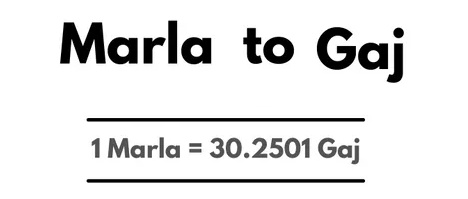
Last updated: July 10, 2026
Search "marla to gaj" and you'll find calculators quoting two different answers: some say 9 gaj, others say 30.25 gaj. Only one is correct for Indian property records — and getting it wrong on a Punjab or Haryana plot can throw off your price-per-gaj math by more than three times.
This guide gives you the verified formula, traces where marla comes from, shows why Pakistan's marla is a completely different size, and covers the sub-units — kanal and biswa — you'll run into alongside it.
Key Takeaways
- 1 Marla = 272.25 sq ft = 30.25 Gaj in India (Punjab, Haryana, Himachal Pradesh, Delhi border areas).
- Pakistan's marla is a different size: 225 sq ft = 25 Gaj — don't mix the two up.
- 1 Kanal = 20 Marla = 605 Gaj, consistent in both countries.
What Is a Marla?
A marla is a traditional land unit used across Punjab, Haryana, Himachal Pradesh, and parts of Delhi's border areas, defined as exactly 1/160th of an acre under British-era revenue settlements. In India, the standard value is 272.25 square feet. Converted into gaj (square yards), that works out to exactly 30.25 gaj — not the rounder "9 gaj" figure that occasionally circulates online and doesn't hold up against the underlying math.
Marla is still common in residential plot listings in Chandigarh, Mohali, Ludhiana, Amritsar, and Patiala, often quoted as "4.5 marla" or "9 marla" plots — sizes that map to fairly standard house footprints in Punjab's smaller towns.
Where the 1/160-Acre Definition Comes From
When British administrators standardised Punjab's land revenue system after annexation in the mid-19th century, they needed a sub-acre unit small enough to describe residential and small agricultural holdings precisely, while still relating cleanly back to the acre used for larger tracts. Marla was fixed at 1/160th of an acre — a division that also produces clean relationships with kanal (1/8th of an acre, or 20 marla) and, ultimately, killa (the local term for a full acre). This is why, unlike bigha in the same region, marla never developed the same district-by-district inconsistency: it was designed as a fraction of the acre from the outset, not layered on top of a pre-existing local tradition the way bigha was.
Marla to Gaj: Formula and Worked Examples
Since 1 marla equals 272.25 sq ft and 1 gaj equals 9 sq ft:
Gaj = Number of marla × 30.25
Marla = Number of gaj ÷ 30.25
How to Convert Marla to Gaj Step 1: note the marla value, example 5 marla. Step 2: multiply by 30.25. Step 3: result is 151.25 gaj. How to Convert Marla to Gaj Worked example: a 5-marla plot STEP 1 Note the marla value quoted 5 marla STEP 2 Multiply by the fixed factor × 30.25 STEP 3 Read the result in gaj 151.25 Gaj Source: Standard Indian marla-to-gaj conversion factor (1 marla = 30.25 gaj)
| Marla | Gaj | Square Feet |
|---|---|---|
| 1 | 30.25 | 272.25 |
| 2 | 60.5 | 544.5 |
| 3 | 90.75 | 816.75 |
| 4.5 | 136.1 | 1,225.13 |
| 5 | 151.25 | 1,361.25 |
| 9 | 272.25 | 2,450.25 |
| 20 (= 1 Kanal) | 605 | 5,445 |
Why Pakistan's Marla Is a Different Size
This is the single biggest source of confusion when searching "marla to gaj" online, since India and Pakistan standardised the unit differently after independence. Both countries inherited the same pre-1947 Punjab revenue system, but subsequent land reforms and re-surveys on each side of the border settled on different final figures — India's marla stayed at 272.25 sq ft, while Pakistan's was fixed at 225 sq ft, roughly 21% smaller:
Marla Isn't the Same Size Everywhere Marla in Pakistan is 225 square feet. Marla in India, used in Punjab, Haryana and Himachal Pradesh, is 272.25 square feet. Biswa, a related sub-unit used in Uttar Pradesh, is 1,361.25 square feet. Marla Isn't the Same Size Everywhere India's marla is about 21% larger than Pakistan's Biswa (UP, for scale) 1,361 Marla (India: Punjab/Haryana/HP) 272.25 Marla (Pakistan) 225 Source: Standard marla and biswa conversion factors, India and Pakistan (sq ft)
If you're comparing listings across the border region — or reading an older document that doesn't specify which standard applies — always confirm which country's marla is being used before converting. A 10-marla plot is 2,722.5 sq ft in India but only 2,250 sq ft in Pakistan, a difference of nearly 500 sq ft.
Marla, Kanal, and Biswa: How the Units Relate
Marla's most common companion unit is the kanal: 1 kanal equals 20 marla in both India and Pakistan, working out to 5,445 sq ft (605 gaj) using the Indian standard. Near the Uttar Pradesh border, you may also encounter biswa, a separate sub-unit of bigha rather than of marla — 1 biswa in UP is 1,361.25 sq ft, which is coincidentally close to 5 Indian marla. These aren't interchangeable units, though, so don't assume a "biswa" quote can be read as marla without converting through square feet first. Our guide to hectare-to-bigha conversion in Uttar Pradesh covers biswa's relationship to bigha in more detail, and our Punjab and Haryana land unit guide covers how killa and kanal fit into the wider system marla belongs to.
How Marla Plot Sizes Vary by City
Just as 200 gaj dominates Delhi NCR listings, specific marla counts dominate different Punjab and Haryana cities. Chandigarh's planned sectors were originally laid out around 10, 14, and 20-marla residential plots under the city's founding master plan, and resale listings still cluster around those historical sizes today. Mohali and other GMADA-developed townships more commonly offer 5, 7, and 10-marla plots aimed at a slightly different buyer segment — smaller households and first-time buyers rather than the larger joint-family homes Chandigarh's original sectors were designed for. In Ludhiana and Amritsar's older city areas, plot sizes are less standardised, often reflecting how agricultural land was subdivided for residential use decades ago rather than a single planning authority's original layout.
This city-by-city variation matters when you're comparing per-marla rates: a "10 marla" plot in a Chandigarh sector and a "10 marla" plot carved out of older agricultural land in Ludhiana are the same 2,722.5 sq ft, but rarely comparable in terms of road access, utilities, or resale demand. As with gaj, the unit conversion is the easy part — the local planning history behind a given plot size is where the real due diligence happens.
Marla and Your Home Loan
As with any traditional unit, a marla figure only matters to a lender once it's backed by the Jamabandi record. Punjab and Haryana banks financing a marla-priced plot will typically send their own valuer to confirm the area against the official record rather than accepting a seller's stated marla count, and the loan-to-value ratio they offer is calculated against that verified figure. Since the gap between India's and Pakistan's marla values is large enough to matter, double-check that any pre-existing paperwork on an older or inherited property is using the Indian standard before you rely on it for a loan application.
Verifying Marla and Gaj Figures Before You Buy
Punjab and Haryana land records are maintained through each state's Jamabandi system, accessible online through the respective state land record portals. Before agreeing on a per-gaj or per-marla rate, confirm the registered area against the Jamabandi entry rather than relying on a broker's quoted figure — the same discrepancy risk that applies to bigha and dismil applies here too. If the plot sits in a housing society rather than an independent revenue estate, also check the society's own layout plan, since marla figures there are sometimes rounded for marketing purposes.
Common Mistakes When Converting Marla to Gaj
- Using the "9 gaj per marla" shortcut. The correct Indian figure is 30.25 gaj — a meaningful difference on any plot larger than a few marla.
- Mixing Indian and Pakistani marla values. Confirm which country's standard applies, especially with older or informally worded documents.
- Treating kanal and acre as roughly equal. 1 kanal (5,445 sq ft) is about 1/8th of an acre, not a close match.
- Confusing biswa (a bigha sub-unit) with marla. They're unrelated units that happen to produce similar-looking numbers in some conversions.
- Skipping the Jamabandi cross-check. A marla figure without a verified land record behind it is a starting point for negotiation, not a number to finalise a price on.
- Not reconciling the marla figure with the lender's independent valuation. As with any traditional unit, a gap here can reduce your approved loan amount rather than just affecting the negotiation.
- Assuming a housing society's marketed marla figure matches the revenue record. Society layout plans occasionally round for marketing purposes — cross-check against the Jamabandi entry specifically.
- Ignoring the local planning history behind a specific plot size. As covered above, a "10 marla" plot in a planned Chandigarh sector and one carved from older agricultural land in Ludhiana carry very different infrastructure and resale profiles despite an identical area.
Quick Reference: Marla Conversion Table
| Unit | Value (India) |
|---|---|
| 1 Marla | 272.25 sq ft = 30.25 Gaj |
| 1 Kanal | 20 Marla = 5,445 sq ft = 605 Gaj |
| 1 Marla (Pakistan) | 225 sq ft = 25 Gaj |
| 1 Acre | ≈ 8 Kanal = 160 Marla |
Frequently Asked Questions
How many gaj is 1 marla?
In India, 1 marla equals 30.25 gaj, based on the standard 272.25 sq ft marla used in Punjab, Haryana, and Himachal Pradesh. The commonly repeated "9 gaj" figure is incorrect for Indian land records.
Is marla the same size in India and Pakistan?
No. India's marla is 272.25 square feet, while Pakistan's is 225 square feet — about 21% smaller. Always confirm which country's standard applies before converting or comparing plot prices.
How many marla make one kanal?
20 marla make one kanal in both India and Pakistan. Using the Indian standard, that works out to 5,445 square feet, or 605 gaj.
Is biswa the same as marla?
No. Biswa is a sub-unit of bigha, mainly used in Uttar Pradesh, while marla is its own unit used in Punjab, Haryana, and Himachal Pradesh. They aren't interchangeable, even though a UP biswa (1,361.25 sq ft) happens to be close to 5 Indian marla in area.
How do I verify a marla figure before buying land in Punjab?
Check the registered area against the Jamabandi record through your state's official land record portal, rather than relying on a broker's verbal figure. For plots inside a housing society, also cross-check the society's approved layout plan.
Does the marla figure affect my home loan amount?
Yes, indirectly. Lenders in Punjab and Haryana base loan-to-value calculations on their own valuer's confirmation against the Jamabandi record, not a seller's quoted marla figure. Reconciling any gap before applying for financing avoids a lower-than-expected sanctioned amount.
Does a "10 marla" plot mean the same thing in every Punjab city?
The area is identical — 2,722.5 sq ft — but the context usually isn't. A 10-marla plot in a planned Chandigarh sector typically has established roads and utilities from the city's original layout, while a similarly sized plot in an older Ludhiana or Amritsar neighbourhood may reflect an informal subdivision of agricultural land, with correspondingly different infrastructure and resale demand.
The Bottom Line
30.25 gaj per marla is the figure to use for any Indian property in Punjab, Haryana, or Himachal Pradesh — not the "9 gaj" shortcut that shows up in some calculators. Once you've confirmed which country's marla applies and cross-checked the Jamabandi record, the conversion itself is simple multiplication.
For the companion unit used on larger Delhi NCR plots, see our 200 gaj to square feet guide, and you can browse verified residential plots on AddressOfChoice listed in standard square feet for easier comparison across regions.
Content Editorial Team, Addresofchoice.com · Published July 10, 2026 · Last Updated July 10, 2026




Arun Kumar
https://www.addressofchoice.com/I am Arun Kumar working with AddressOfChoice Realty Private Limited as a Digital Marketing Executive. I have 8 Year Experience in same field. I love to share blog and Article.
Get in Touch With us
Register here and Avail the Best Offers!!